March 1, 2026

The Ante Clan of Polangui

The history of the Ante clan goes back to the early 1800s in Sagpon, then a barrio of the pueblo of Albay, which served as the province’s cabecera (capital) during the Spanish period. Although the family began in Sagpon, its lasting legacy would take shape elsewhere. It was through the lives and decisions of two sisters—Basilia and Juliana Ante—that the family name became firmly rooted in Polangui.

At the center of the family’s early story was Bernabela Ante, a woman who owned large areas of land in Sagpon. At a time when land meant wealth, power, and social standing, Bernabela was part of one of the town’s respected families. She had six children—Basilia, Gregoria, Juliana, Feliciano, Hugo, and Eriberta. Through them, the Ante name spread across Bicol and beyond. Still, it was Basilia and Juliana who would bring the family name permanently to Polangui.

In 1861, Basilia Ante married a Chinese merchant who later converted to Christianity and took the name Jose Muñoz. They settled in Oas, Albay. Their children carried the surname Ante, keeping their mother’s family name. This was an important decision that helped preserve the Ante name for future generations.

One of Basilia’s children was Hermenegildo Ante, whose son would become one of the most well-known members of the family: Dr. Esteban V. Ante. By the early 1900s, the family’s influence had grown beyond land ownership into professional and public life. Dr. Ante graduated from the University of the Philippines College of Medicine in 1922. In 1930, he founded Sta. Teresita Hospital, now known as Dr. Esteban V. Ante Memorial Hospital in Legazpi City. He later became the first Filipino medical chief of the former Albay Provincial Hospital, now called the Bicol Regional Hospital and Medical Center. Through his work, the Ante name became part of Bicol’s medical history.

Another son, Juan Ante, became a wealthy landowner and community leader. He married Josefa Sarte Sapalicio of Polangui, linking the family to two prominent clans in the town. Their son, Gregorio Ante, served as municipal president of Polangui during the American period, a position similar to today’s mayor. From this same family line came Conrado Ante Sabater, who later served as mayor of Polangui from 1960 to 1964 and again from 1968 to 1981.

Rosa Ante, Basilia’s daughter, also strengthened the family’s ties through her marriage to Gregorio Duran, a member of the influential Duran political family of Albay. Through these marriages, the Antes built strong social and political connections in the province.

In 1874, Basilia’s life changed again. After being widowed from her first marriage, she married Domingo Silo, a wealthy landowner in Polangui. She and her children then moved from Oas to Polangui. This move marked the true beginning of the Ante clan’s permanent presence in the town.

From her marriage to Domingo Silo, she had two children: Filemon Silo and Maria Silo. Maria later married Rufino Tuanqui, the first native of Polangui to serve as Governor of Albay. Rufino was the only son of Simon Li Tuanqui, a prosperous Chinese businessman, and Maria Sarte, who came from the respected Sarte and Duran families. Through these family ties, the Antes became closely connected to prominent Chinese-Filipino and political families in Albay.

Juliana Ante, Basilia’s younger sister, also played an important role in establishing the family in Polangui. In 1868, she married a Chinese merchant named Sua Tuangco, who converted to Christianity and took the name Valentin Villaflor. They had one daughter, Maxima Rosario Ante.

After being widowed at a young age, Juliana eventually joined Basilia in Polangui. The two sisters became the first Antes in the town. All Ante families in Polangui today trace their roots back to one of them.

In 1888, Maxima Rosario Ante gave birth to a son named Jose Ante. His father was the Spanish Governor of Albay, Don Estanislao de Antonio. Jose carried his mother’s surname, continuing the Ante name into the next generation.

Later, Maxima married Catalino Delgado. They had two sons, Felix and Antonio Delgado, creating another branch of the extended family.

As an adult, Jose Ante married Gregoria Benipayo of Polangui. They settled in Ponso and raised four children—Manuel, Jesus, Modesto, and Obdulia. Through marriages into families such as the Bayos, Samar, Silo, Abarquez, and Borja clans, the Ante name continued to grow within Polangui.

The story of the Ante clan reflects the wider history of Bicol: families moving from one town to another, Filipino, Chinese, and Spanish influences coming together, and generations rising through land, education, and public service.

What began with Bernabela Ante’s land in Sagpon took lasting shape through the courage and decisions of Basilia and Juliana. By settling in Polangui, building strong family ties, and keeping the Ante name alive, they made sure it would remain part of the town’s history for generations to come.
October 17, 2023

The Red Guijo Tree: A New Perspective on the Etymology of "Polangui"

Polangui, a historical town nestled in the province of Albay, Philippines, has long been a subject of intrigue for historians and etymologists. The origin of its name has been the subject of various theories, from tales of a robust tree known as "Oyangui" to legends about a maiden named "Pulang Angui." However, a 19th-century book offers an alternative etymology that sheds new light on the town's name. 

In his 1887 work, "Viajes por Filipinas: De Manila á Albay," Juan Alvarez Guerra suggests that the name "Polangui" might find its roots in a type of tree native to the Philippines and several other regions in Southeast Asia. This perspective places a spotlight on the Guijo tree, scientifically known as Shorea guiso and referred to as Guisoc in the Bikol language. Alvarez proposes that "Polangui" might be a variation of "Pulang Guisoc," signifying a 'Red Guijo' tree.

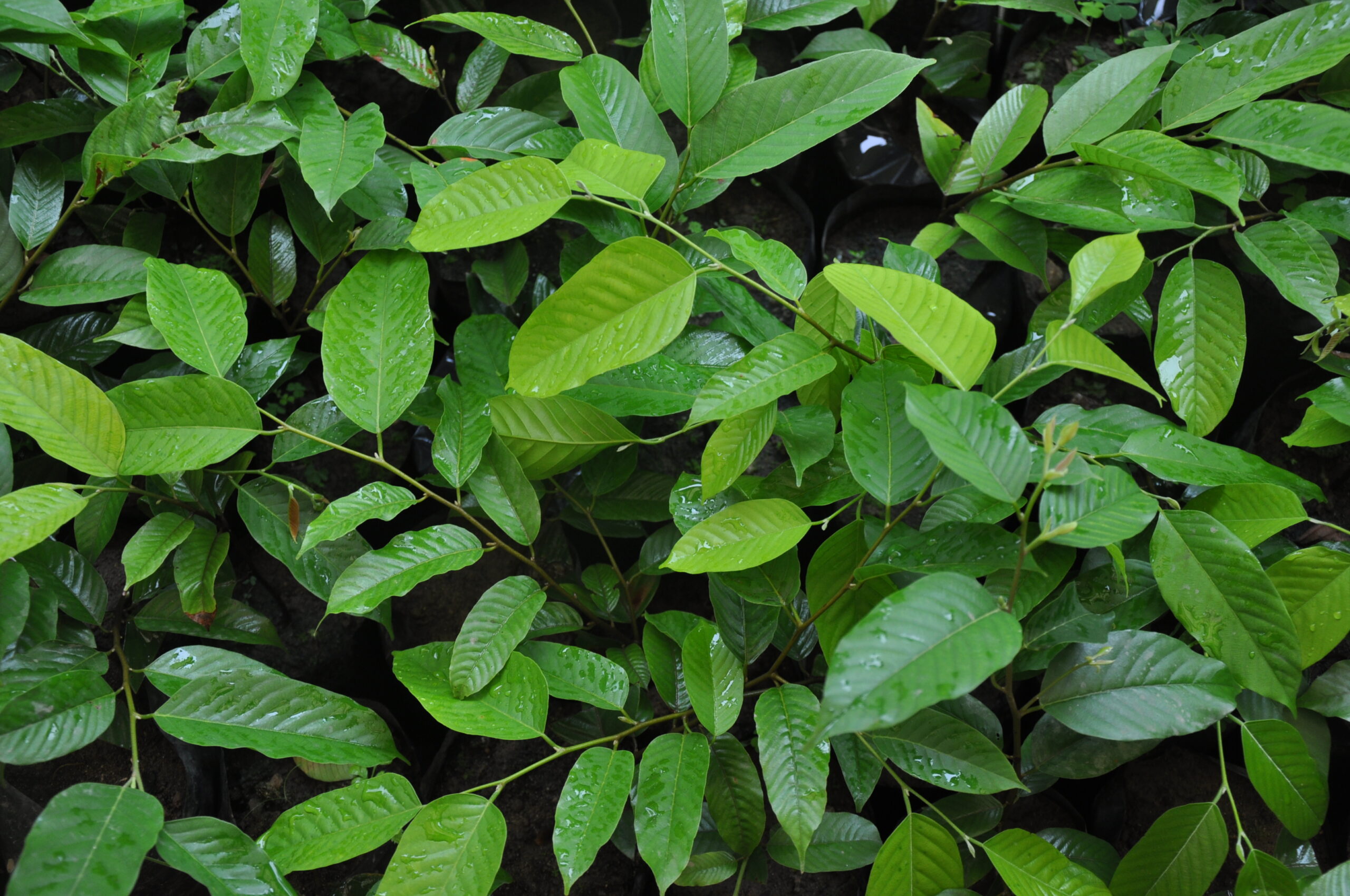
The Guijo tree is known for its towering height, dark color of its branches, and its most striking feature, pale reddish-brown bark when freshly peeled. Its wood is typically medium to heavy, and it's known for its medium to hard texture, making it a challenging wood to split. Its coloration varies from light grey-brown to brown, with occasional reddish tinges, adding an element of 'red' to the tree that could further reinforce the connection to the name "Polangui."

Shorea guiso (Photo courtesy of binhi.ph)

The Guijo tree holds notable significance due to its commercial hardwood and ecological importance within natural forest ecosystems. But could it have held a more profound cultural or symbolic value for the early inhabitants of Polangui? The presence of a red Guijo tree could have left an indelible mark on these settlers, possibly serving as a prominent landmark or symbol crucial enough to name an entire settlement after. Given the abundance of Guijo trees in the area and their significance, it's not far-fetched to consider this as a compelling explanation for the town's name "Polangui."

Furthermore, the Guijo tree holds practical value. Its exceptionally hard wood makes it ideal for constructing robust harigues or pillars for traditional houses. The durability and strength offered by the Guijo further validate its potential importance and relevance to the early settlers in the region, lending support to the proposed etymology of "Polangui" as deriving from the notable and valuable red Guijo tree, symbolizing resilience and craftsmanship.

Regardless of which theory proves true, each perspective enriches our understanding of Polangui's diverse cultural history and the intricate interplay of environmental, cultural, and linguistic factors that have shaped its identity. The town's name carries within it the whispers of history, waiting to be explored further. This new perspective on the etymology of "Polangui" and its potential connection to the Guijo tree invites us to delve deeper into the fascinating history of this historical town and its intriguing name. Further research and exploration of local lore and historical records could shed more light on this captivating aspect of Polangui's heritage.

September 5, 2015

Exciting New Flavors Await at Avenue Plaza Hotel

Hey there, foodies and adventurers! Brace yourselves for a culinary journey like no other, because Naga City is about to get a taste of something truly special. Avenue Plaza Hotel, a name synonymous with top-notch hospitality in the Bicol Region, is gearing up to unveil its brand-new collection of specialty dishes on Tuesday, September 8, 2015. Get ready to tantalize your taste buds with a menu that's set to redefine Naga City's food culture.

The anticipation is building, and it's not hard to see why. Avenue Plaza Hotel is renowned for its excellence, and their latest culinary creation promises to be no exception. Imagine being treated to an array of delectable dishes, each meticulously crafted by the award-winning culinary team, led by the maestro himself, Chef Rudy Velasco.


Photo courtesy: www.theavenueplazahotel.com

But here's the juicy part: Last week, I had the privilege of being invited to a sneak peek at Café Plazuela, the hotel's in-house fine/casual dining restaurant. Alongside my fellow Bicol Bloggers and the cool crew from Nagayon.com, we were among the very first to savor the exciting offerings from the new menu.


The elegant Café Plazuela at Avenue Plaza Hotel in Naga City, Bicol, Philippines

Prepare your taste buds for a culinary adventure that spans the globe. Avenue Plaza Hotel's new menu is a tantalizing fusion of local flavors and international delights. It's a smorgasbord of specialty dishes influenced by Asian, Western, and Mediterranean cuisines. From mouthwatering appetizers to vibrant salads, soul-warming soups, fresh seafood, succulent steaks, and divine desserts – this menu has it all.

Are you already salivating at the thought of it? I don't blame you! Just take a peek at some of the scrumptious dishes that will be gracing the tables on September 8th.

Luxurious Crab Louis

Scottish Smoked Salmon Melba

Cold Cuts Harmony

Gambas Ala Venetian

Chicken essence with Coriander Quenelles and Quail Egg

The Classic Ceasar Salad

Prawn Pascagoula

Australian Tenderloin Steak

Cappuccino Chocolate Cheesecake

If you're ready to embark on this culinary journey or simply want to make a reservation, here are the details:

Magsaysay Avenue, City of Naga "Heart of Bicol" Philippines, 4400
Telephone: 0918-823-9999 / 0917-101-4999 / 0917-101-5999 / 0917-101-6999
Email: info@theavenueplazahotel.com

Don't miss out on this epicurean adventure. Mark your calendars and get ready to indulge in the flavors of Avenue Plaza Hotel. Your taste buds will thank you, and your heart will long for more!

May 16, 2015

Discovering Mercedes: Bicol's Hidden Gem

When we chat about travel destinations in Camarines Norte, the dazzling white sands of Calaguas Island usually steal the spotlight. It's like the poster child for paradise, attracting hordes of wanderers to its shores. But hold on to your sunhats, because I've got a secret to spill – there's a lesser-known gem called Mercedes that's been hiding in plain sight!

My journey into this coastal treasure trove began when a buddy from the Bicol Bloggers crew tossed me an invite to join their "Take Me To Mercedes" familiarization tour, aptly hashtagged as #TMTM. What ensued was a discovery mission that left me completely smitten with a place I had scarcely heard of before.


Mercedes: The Belle of the Pacific

Mercedes is tucked away in the eastern nook of Camarines Norte, snuggled in the loving embrace of the Bicol Region. Picture it: the northern horizon bathed by the mighty Pacific Ocean, and the town nestling at the entrance of San Miguel Bay. Mercedes is a playground of natural riches, especially its thriving fishing grounds. It's the fishing hub of Bicol, a place where the fish trade is the lifeblood of the community. I witnessed this bustling industry firsthand during my visit to Mercedes' vibrant port.

While fishing sustains the town year-round, it's no secret that the winds and waves play a seasonal tune in this coastal melody. During the off-season, when the sea turns tempestuous, an alternative livelihood was the need of the hour. The local government, aided by Japan International Cooperation Agency (JICA) and other kind-hearted international allies, decided to turn the spotlight on tourism as a lifeline for the lean months.

Isles of the Seven Sins

Now, let's talk about the true stars of Mercedes' tourism show – the Siete Pecados, or "seven sins" in Spanish. Despite the name's ominous ring, these islands are paradise on Earth, so beguiling that you'll forget about the world's troubles. So why Siete Pecados? Well, maybe because they're sinfully beautiful! 😄

During our tour, we managed to set foot on four of the seven islands. Adverse tides kept us from landing on the others, but let me assure you, the ones we did explore were enough to leave us spellbound.

Caringo Island – This gem sits at Mercedes' southern tip, a bit of a journey from the town's port.


With its ivory beach strewn with shells and a vibrant coral reef just offshore, it's a paradise for beach lovers and underwater explorers alike.


Beyond the physical beauty, what struck me most about Caringo was the genuine effort by the locals to embrace tourism as a community. They've even ventured into seaweed farming, ensuring sustainable income during the off-season.


Canton Island – If you're the type who craves solitude, Canton Island is your sanctuary. It's uninhabited, offering a pebble beach and a pristine mangrove forest for eco-warriors to nurture.


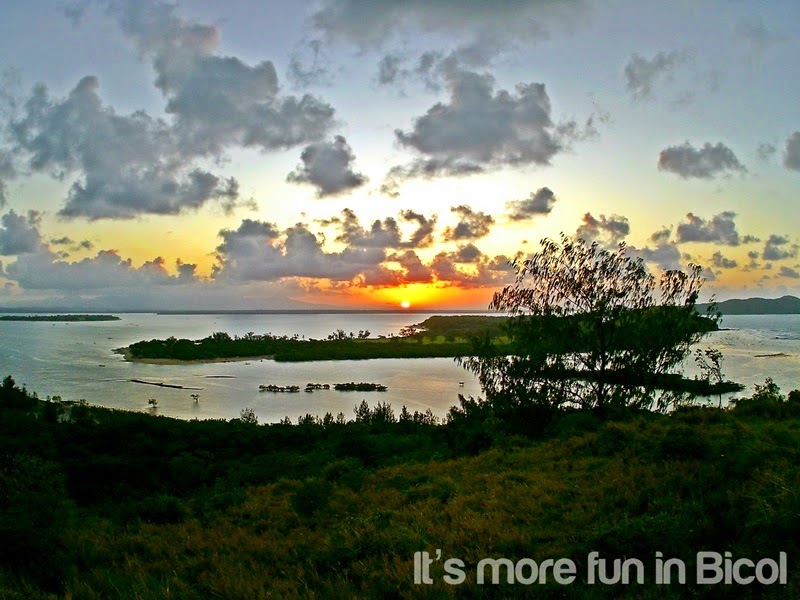
The sunsets here are downright legendary!


Apuao Islands – Picture this: Apuao Grande and Apuao Pequeña, connected by a slender sandbar. These islands are the crown jewels of Mercedes, flaunting their exquisite beauty with pride. From sunrise to calm seas, pine-lined shores to white sandy beaches, everywhere you look, there's magic.


Energizing sunrise…


Calm sea…


Pine tree-lined shores…


Lovely white sand beach…


Amazing view…


I'm officially smitten with Apuao Islands, and I hope more people, especially the locals of Mercedes, get to experience this wonderland and fall in love with their hometown all over again.

More Mercedes Magic

But wait, there's more to Mercedes than its islands! If boats aren't your thing or seasickness is your nemesis, fear not – Mercedes has plenty to offer on terra firma.

Cayucyucan Beach – Love the beach but not island hopping? Cayucyucan Beach in Barangay Cayucyucan has your back. Ideal for day trips, team building, or a simple sea dip, it's got everything. For those planning an overnight stay, a couple of resorts are at your service, as well as budget-friendly homes for savvy travelers.


I highly recommend Palms Farm Resort. The resort is lovely, colorful, and wholesome. It’s a family-friendly resort perfect for outings and family gatherings. The waters near the beach is shallow so it’s very safe for kids.


Brgy. Cayucyucan, Mercedes, Camarines Norte
Contact Nos. 0927-587-1001 or 0917-500-6639

Colasi Falls – Nestled in Mercedes' lush rainforest, Colasi Falls is a masterpiece of Mother Nature.


The journey might involve a bit of a trek, but when you gaze upon this 70-foot waterfall, you'll know it's worth every step.


If you want to experience the refreshing waters of Colasi Falls, please coordinate with the Mercedes Tourism Office or the local officials of Brgy. Colasi. They can arrange experienced guides for your visit.


Catandunganon River – River cruising aboard the Doña Mercedes Floating Restaurant offers a fresh perspective on Mercedes. It's an excellent way to get acquainted with the bustling port while enjoying the picturesque riverbank scenery and savoring mouthwatering Bicolano cuisine.


Mercedes is Love, Love, Love…

In closing, Mercedes is an absolute charmer. Its natural allure and the warmth of its people make it irresistible. The town's tourism slogan, "Love ko si Mercedes" (I love Mercedes), hits the nail on the head. It's precisely how I feel about this enchanting place – I love Mercedes.


For travel plans and inquiries, get in touch with the Municipal Tourism Office:

Email: discovermercedes@yahoo.com
Tel. Nos: +63544441261 / +63544441151
Instagram: @lovekosimercedes

So, pack your bags, fellow adventurers, and let Mercedes work her magic on you – the Pacific's hidden jewel awaits!
Related Posts Plugin for WordPress, Blogger...